
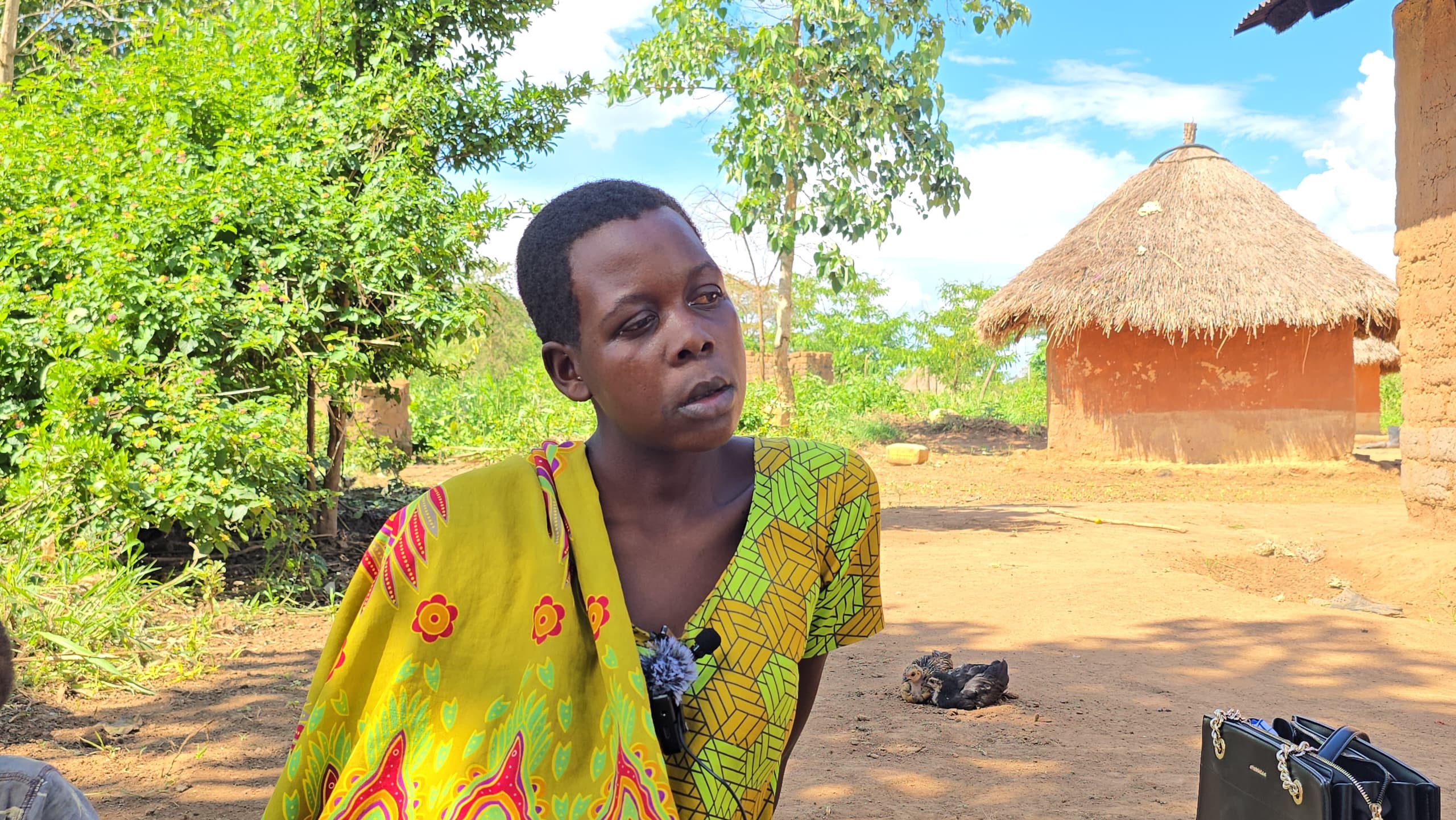
In the quiet village lanes of Etam Town Council in Amolatar District, 30-year-old Kevin Acila is rediscovering a world she had not seen in more than a decade a world filled with faces, colours, and the ordinary moments she once only imagined.
For years, Acila lived in complete darkness after gradually losing her sight at the age of 17. What began as a minor eye problem slowly worsened until she became fully blind, forcing her into total dependence and isolation.
Today, following successful surgery during an outreach eye camp at Amolatar Health Centre IV, Acila can finally see again.
“I could not see anything,” she recalls. “Even when washing clothes for the children, stains would remain because I could not see them. I could not even see my own children.”
Her story highlights the growing burden of preventable blindness in Uganda, particularly in rural communities where access to specialised eye care remains limited.
With few medical services available in Amolatar District, Acila’s condition went untreated for years.
Blindness transformed every aspect of her life. Simple household tasks became dangerous and humiliating. One painful incident remains etched in her memory.
“I was preparing maize to take for grinding, but I did not notice there was a Shs200 coin mixed inside. The coin ended up damaging the grinding mill,” she says.
Despite her condition, life continued. In 2018, 40-year-old Yubu Akwanga married her, unaware of the extent of her visual impairment.
“My husband did not know about my condition because my parents never told him,” Acila explains.
Yubu says he only discovered the severity of her blindness after marriage.
“I realized how serious it was after the maize incident,” he says. “That is when I understood she could not see at all.”
Rather than abandoning her, Yubu chose to stay and support his family.
“I do all the house chores — lighting the fire, sorting beans, cooking — everything,” he says. “I got used to it because she needed help.”
Over the years, he became both husband and caregiver, carrying the weight of responsibilities that many would struggle to manage.
Acila says blindness robbed her of independence and deeply affected her emotionally.
She remembers getting lost while returning from the market one day and wandering until a neighbour eventually guided her home.
More painful, however, was raising children she had never seen.
“I could not even see my children,” she says emotionally.
At one point, the confusion caused by her condition became so overwhelming that she nearly rejected one of her own children because she could not recognize them.
Her breakthrough came during an outreach surgical eye camp organized at Amolatar Health Centre IV by specialists from Lira Regional Referral Hospital.
According to Isaac Junior Ekwan, a clinical officer in the eye care department, Acila was diagnosed with cataracts in both eyes — a condition that is treatable through surgery.
“Many causes of blindness, especially cataracts, can be reversed if diagnosed and treated early,” Ekwan explains. “The challenge is that many rural patients seek help very late because services are far away or unaffordable.”
Following surgery, Acila’s sight was restored.
The moment she saw clearly again left her overwhelmed with emotion.
“After the surgery, I could finally see everything,” she says. “When I saw my child properly, I could not believe I was the mother. I almost rejected her before because I could not see.”
Health experts warn that Acila’s story reflects a wider public health challenge in Uganda, where thousands continue to suffer from avoidable blindness due to poverty, delayed treatment, and limited access to eye care services.
Cataracts remain one of the leading causes of blindness in the country.
Ekwan says the impact extends beyond health alone.
“Blindness affects livelihoods, independence, education, and family life. It places a huge burden on caregivers and entire households,” he notes.
Medical workers are now calling for increased investment in eye health services, expanded outreach programmes, and greater public awareness to ensure more Ugandans receive treatment before losing their sight permanently.
Today, Acila is slowly rebuilding her life.
She can now move independently, care for her family, and experience everyday moments that once seemed impossible.
For the first time in years, she says, the future feels visible again.
